

5 Paths to Launch Your Cybersecurity Career Without a Degree
Want to start a career in cybersecurity without a degree? Here’s how you can break into this high-demand field by focusing on practical skills, certifications, and hands-on experience:
- Earn Certifications: Start with beginner-friendly options like CompTIA Security+ or IBM Cybersecurity Analyst to prove your skills.
- Use Hands-On Platforms: Practice real-world scenarios on TryHackMe or Hack The Box to build expertise.
- Begin with IT Roles: Entry-level jobs like Help Desk Technician or Network Support Specialist can provide critical experience.
- Network & Showcase Skills: Join cybersecurity communities, attend events, and build a professional profile to connect with potential employers.
- Stay Updated: Continuously learn through webinars, podcasts, and advanced certifications like CISSP or CEH to grow your career.
Quick Comparison of Key Resources
| Resource | Purpose | Best For | Cost |
|---|---|---|---|
| CompTIA Security+ | Entry-level certification | Beginners | $370 exam fee |
| TryHackMe | Hands-on learning platform | Beginners to Intermediate | $10/month |
| Hack The Box | Advanced practice | Intermediate to Advanced | $20/month |
| Entry-Level IT Roles | On-the-job experience | Beginners | Varies |
Cybersecurity jobs prioritize skills over degrees. By following these steps, you can confidently start your career today.
How I Would Learn Cyber Security if I Could Start Over in 2024
1: Certifications and Training Programs
Jumpstarting your cybersecurity career with recognized certifications offers a practical, skills-focused route, often skipping the need for a traditional degree.
Key Certifications
If you’re just starting out, CompTIA Security+ is a great choice. It covers the basics of cybersecurity and is widely accepted for entry-level roles.
Here are some other certifications worth exploring:
| Certification | Focus & Recognition |
|---|---|
| CompTIA Security+ | Covers security basics; widely accepted for beginners |
| IBM Cybersecurity Analyst | Focuses on threat intelligence and incident response; valued by tech companies |
| GIAC Information Security Fundamentals | Emphasizes core security principles; often sought in government roles |
| Certified Ethical Hacker (CEH) | Specializes in penetration testing and auditing; popular with consulting firms |
Training Programs for Beginners
Training programs can be a direct gateway into the field. For example, programs like Cybersecurity Career Academy offer a mix of internships, simulations, and certification prep to help you gain hands-on experience.
These courses are tailored for those without formal degrees, focusing on job-ready skills. They often include webinars, internships, and access to industry-standard tools. Look for programs that combine certification prep with practical experience – this combination can make you stand out to employers.
Certifications prove your knowledge, but hands-on platforms let you apply what you’ve learned in real-world scenarios, giving you a stronger foundation for your career.
2: Hands-On Learning Platforms
Certifications can provide a solid base of knowledge, but practical experience is where the real growth happens. These platforms help you move from theory to real-world application, making them a key part of your cybersecurity journey.
Exploring TryHackMe and Hack The Box
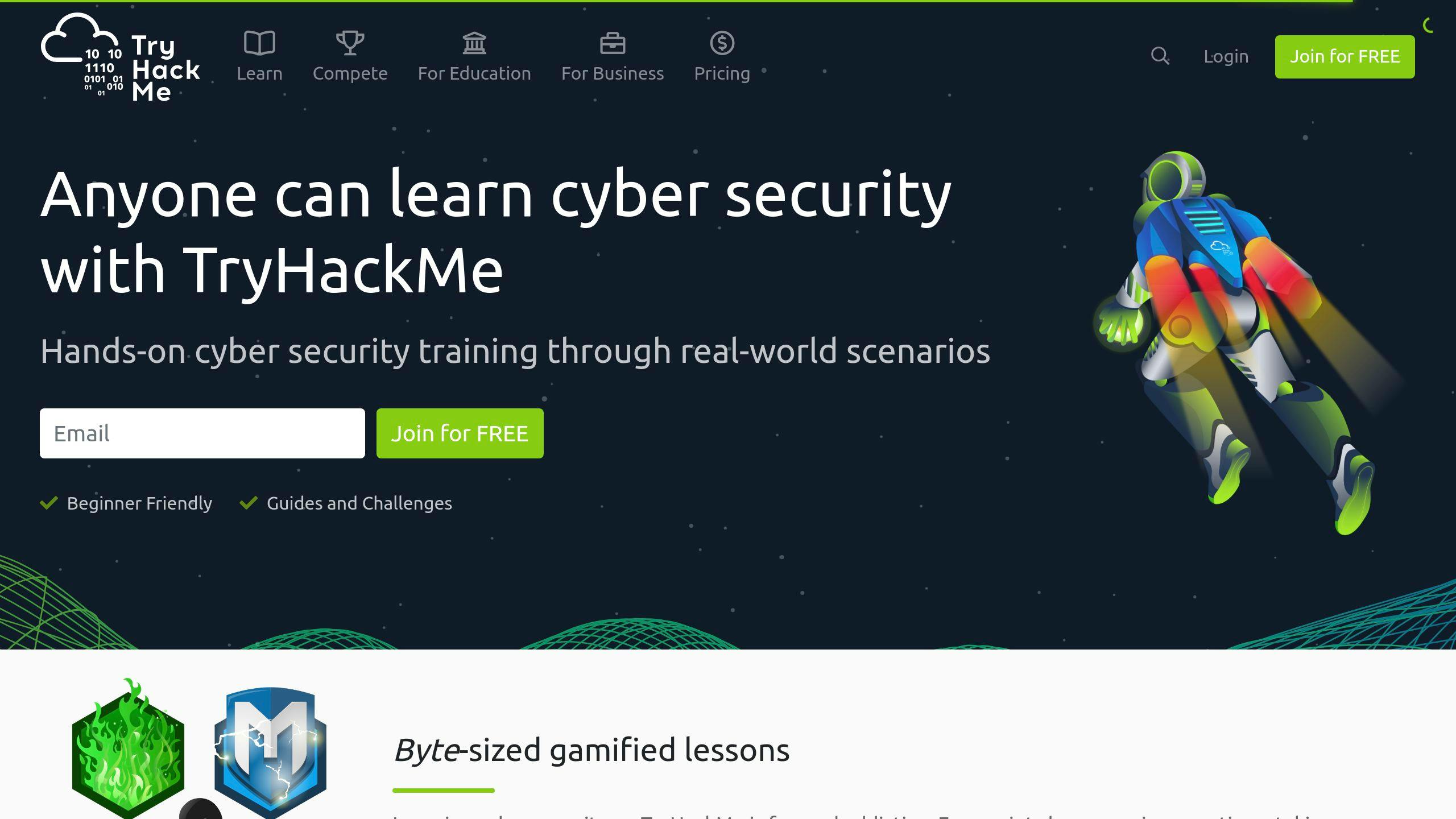
Platforms like TryHackMe and Hack The Box offer safe, interactive environments to sharpen your cybersecurity skills.
- TryHackMe is great for beginners, offering structured paths that cover topics like network security, penetration testing, and threat detection.
- Hack The Box caters to more experienced users with challenges that closely mimic real-world scenarios, ideal for those diving into penetration testing or ethical hacking.
| Platform | Best For | Starting Price | Key Features |
|---|---|---|---|
| TryHackMe | Beginners to Intermediate | $10/month | Guided paths, Virtual labs, CTF challenges |
| Hack The Box | Intermediate to Advanced | $20/month | Real-world systems, Advanced challenges, Active community |
Why Hands-On Practice Matters
Getting practical experience through these platforms comes with several benefits:
- Skill Development: Gain hands-on experience with industry tools and tackle situations that reflect real cybersecurity threats. With the cybersecurity market projected to hit $346 billion by 2026 [2], these skills are in high demand.
- Build Your Portfolio: Document your completed challenges to show employers your problem-solving abilities.
- Community Support: Learn alongside peers and industry pros, opening doors to mentorship and job opportunities.
- Prepare for Real-Life Scenarios: Work on tasks that simulate actual security incidents, so you’re ready when it counts.
Once you’ve honed your skills on these platforms, you’re ready to take on entry-level IT roles that can pave the way for a cybersecurity career.
3: Beginning with Entry-Level IT Jobs
After gaining hands-on experience through learning platforms, the next step is to land an entry-level IT job. With a projected cybersecurity workforce gap of 3.5 million by 2025, many companies are now prioritizing practical skills over formal degrees.
Entry-Level Jobs to Target
Starting your cybersecurity journey often involves foundational IT roles that help you develop critical technical skills. These positions not only teach you the basics but also give you firsthand exposure to the security challenges you’ll tackle as a cybersecurity expert.
| Role | Key Responsibilities | Skills You’ll Gain |
|---|---|---|
| Help Desk Technician | Offering tech support and maintaining systems | Troubleshooting, customer service, basic security knowledge |
| Junior System Administrator | Maintaining systems and implementing security measures | Operating system management, handling security tools |
| Network Support Specialist | Monitoring and configuring networks | Network fundamentals, using monitoring tools |
Data shows that 75% of cybersecurity professionals started their careers in IT roles. These jobs provide hands-on experience with systems and networks, which are the foundation of cybersecurity work.
Building Core IT Skills
To succeed in cybersecurity, you need a strong grasp of IT basics along with essential soft skills:
Technical Skills to Focus On:
- Networking fundamentals
- Operating systems like Windows Server and Linux
- Cloud platforms such as AWS, Azure, and Google Cloud
- Basic scripting with tools like Python or PowerShell
Soft Skills That Matter:
- Problem-solving and analytical thinking
- Explaining technical concepts clearly
- Working effectively in teams
- Documenting incidents thoroughly
Every IT problem you solve contributes to your cybersecurity readiness. These experiences help you develop the mindset needed to tackle complex security challenges.
Once you’ve built a solid IT foundation, the next step is connecting with the cybersecurity community and showcasing your expertise to employers.
sbb-itb-ceee48c
4: Networking and Demonstrating Skills
Building connections and showcasing your cybersecurity expertise can have a major impact on your career, especially if you’re breaking into the field without a formal degree.
Connecting with the Cybersecurity Community
Engaging with the cybersecurity world is easier than ever. Platforms like LinkedIn Groups and Reddit’s r/netsec let you join discussions, share insights, and find potential mentors. Big events like Black Hat and DEF CON are excellent for in-person networking, but you can also start small with online communities or local gatherings.
Here are some key platforms to consider:
| Platform | Purpose | Networking Opportunities |
|---|---|---|
| Local Meetups | Face-to-face events | Meet professionals, exchange ideas, gain job leads |
| Stack Overflow | Problem-solving hub | Show off your expertise and connect with like-minded peers |
Getting involved helps you stay updated on industry trends, build meaningful relationships, and possibly find mentors or job opportunities.
Building a Professional Profile
Your professional profile is your chance to highlight your skills and achievements in cybersecurity. Focus on practical experience and technical expertise rather than academic credentials.
What to Include in Your LinkedIn Profile:
- A concise headline that reflects your career goals in cybersecurity
- Detailed descriptions of hands-on work with tools like Burp Suite or Metasploit
- Certifications, such as CompTIA Security+
- Examples of your involvement in cybersecurity projects or community forums
Contributing to open-source projects like OWASP ZAP is a great way to showcase your skills in web application security testing while earning respect in the community.
Ways to Showcase Your Skills:
- Write technical blog posts on cybersecurity topics
- Share your work on GitHub, including tools or scripts you’ve developed
- Participate in and contribute to cybersecurity forums
Networking is just the beginning. Your professional profile is where you prove your readiness for the job by demonstrating the skills and experience that set you apart from the competition.
5: Continuous Learning and Career Advancement
Building on certifications and hands-on experience, staying up-to-date is crucial in the fast-changing world of cybersecurity. This field evolves rapidly, with new threats and tools emerging almost daily.
Staying Updated on Industry Trends
Dedicate regular time each week to improving your skills and staying informed. Here are some effective ways to keep up:
| Learning Method | Advantages | Time Commitment |
|---|---|---|
| Industry Webinars | Learn about the latest threats in real-time | 1-2 hours per week |
| Online Courses | Gain structured knowledge of new tools | 3-5 hours per week |
| Security Podcasts | Stay informed while commuting or multitasking | 2-3 hours per week |
| Advanced Labs | Practice complex, hands-on scenarios | 5+ hours per week |
Consider joining professional groups like the Information Systems Security Association (ISSA) to gain insights into trends and threats shaping the industry.
Practical Tips for Skill Development:
- Dedicate time daily to reading news, practicing skills, or attending expert-led sessions.
- Use hands-on labs and challenges to sharpen your abilities.
- Follow respected security researchers and thought leaders on professional platforms.
Climbing the Cybersecurity Career Ladder
Career advancement in cybersecurity often depends more on proven expertise than formal education. Pursue advanced certifications that align with your professional goals to stand out.
Top Advanced Certifications:
- CISSP (Certified Information Systems Security Professional)
- CISM (Certified Information Security Manager)
- CEH (Certified Ethical Hacker)
Certifications like CISSP or CEH can open doors to roles such as Security Engineer or even Chief Information Security Officer (CISO). To further your career, take on complex projects, volunteer for security-related tasks at your current job, and keep a record of your accomplishments. Continuous learning and hands-on experience are the keys to long-term success in this field.
Conclusion: Your Route to a Cybersecurity Career
Cybersecurity offers plenty of opportunities for those ready to explore non-traditional paths. The industry prioritizes proven skills and experience over formal degrees, opening doors to individuals from diverse backgrounds.
To kickstart your career, focus on a mix of certifications, hands-on practice, and building connections. Certifications like CompTIA Security+ provide foundational knowledge and demonstrate your skills to potential employers. Platforms such as TryHackMe and Hack The Box allow you to sharpen your abilities through practical challenges, helping you create a portfolio that stands out.
Success in this field requires commitment, ongoing education, and networking. Engaging in online forums, attending industry events, and finding mentors can help you build relationships that lead to job opportunities. These efforts, combined with your growing expertise, can pave the way to roles like Penetration Tester, Security Software Developer, or Network Security Engineer [1][2].
The demand for cybersecurity professionals continues to grow. By focusing on certifications, real-world experience, and networking, you can confidently carve out a career in this field – regardless of your starting point. Employers are looking for people who can prove their capabilities through action, not just education.
FAQs
Can you get a cybersecurity job with no experience?
Absolutely, breaking into cybersecurity without prior experience is possible. This field values practical skills and offers various entry points. You can start by earning certifications like CompTIA Security+, exploring hands-on platforms like TryHackMe, or beginning in entry-level IT roles. With the increasing number of cyberattacks, the demand for skilled professionals continues to grow.
| Entry Path | Benefits | Estimated Timeline |
|---|---|---|
| CompTIA Security+ | Recognized certification; builds core knowledge | 2-3 months of study |
| TryHackMe/Hack The Box | Hands-on learning; practical skills | Start immediately |
| Entry-Level IT Roles | On-the-job experience; skill-building | 6-12 months |
Here’s how to get started:
- Earn foundational certifications: Start with CompTIA Security+ to establish your fundamentals.
- Gain practical experience: Platforms like TryHackMe and Hack The Box provide interactive, real-world scenarios to sharpen your skills.
- Target specific roles: Look into positions like information security analyst or network security administrator to kick off your career.
Cybersecurity rewards those who focus on building practical knowledge and skills. By following these steps, you can confidently begin your journey, even if you’re starting from scratch.
